
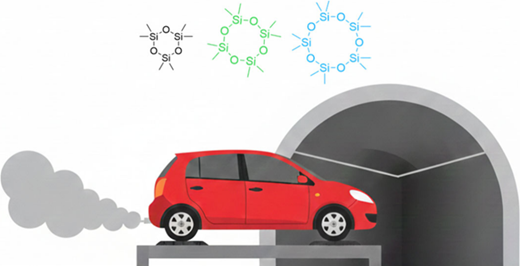
The first scientific paper based on EASVOLEE campaign measurements provides new evidence that vehicles can be an important source of gas-phase volatile methyl siloxanes (VMS), with implications for urban air quality and emission inventories.
A new study published in Environmental Science & Technology Letters presents the first speciated measurements of gas-phase volatile methyl siloxanes (VMS) emitted by on-road vehicles. The study combines controlled chassis dynamometer experiments with measurements under real-world traffic conditions in the Fréjus Road Tunnel between France and Italy.
For the EASVOLEE project, the study represents an important first step in translating campaign measurements into new scientific understanding of volatile and semi-volatile organic emissions associated with modern transportation.
More broadly, the findings highlight the importance of looking beyond the traditionally recognised sources of atmospheric VMS.
The paper
Chen, Y. et al. (2026). Emissions of Volatile Methyl Siloxanes (VMS) from Vehicles. Environmental Science & Technology Letters, 13, 1145–1150.
Read the full paper: